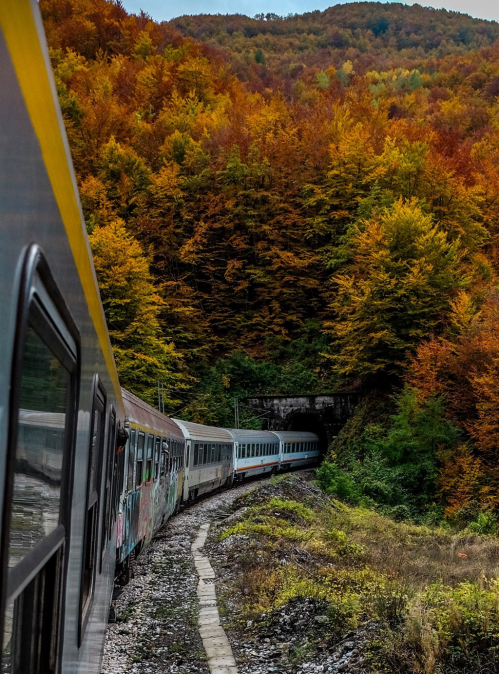
EBRD loan signed for the modernisation of Montenegro's strategic Bar–Podgorica railway line
Montenegro's main railway connection between the Port of Bar, Podgorica and the border with Serbia is set to become safer and more reliable following the signing of a €50 million European Bank for Reconstruction and Development (EBRD) loan on 1 October 2026.
The loan is one component of a wider investment package for the railway, supported through the Western Balkans Investment Framework (WBIF), which also includes €112.6 million in grants from the European Union and a €63 million loan from the European Investment Bank (EIB).
The EBRD loan will allow Montenegro's state-owned railway company to finance rehabilitation works on the 39 km Golubovci–Bar section of the line. The works will include renewing the tracks, three railway stations and 11 bridges, as well as upgrading signalling, telecommunications and power-supply systems.
The investment is expected to improve journey times and safety, reduce operating and maintenance costs, and encourage a shift from road to rail, helping to reduce transport-related carbon emissions.
The line forms part of the Trans-European Transport Network (TEN-T), connecting Montenegro to Serbia and onward to the wider European market.
"Modernising this vital railway connection will make travel and freight transport safer, more reliable and more sustainable. By linking the Port of Bar more efficiently with the rest of Montenegro, neighbouring Serbia and the wider European market, the project will support trade, regional integration and the country's transition to a greener transport system," said Grzegorz Zielinski, the EBRD's Managing Director for South-Eastern Europe.
"This is not merely an investment in 39 kilometres of railway track; it is an investment in Montenegro's future, its connectivity with the region and Europe, and a stronger economic foundation for future generations. It is particularly significant that we are implementing this project with the strong support of our European partners – through a combination of loans and grants – demonstrating that Montenegro recognises its development priorities and secures high-quality, sustainable funding sources for them. We will continue to manage public finances responsibly and create the conditions for capital investments to translate into better infrastructure, greater economic potential and a higher quality of life for our citizens. The modernisation of the Golubovci–Bar railway represents an important step in that direction and confirms our determination to forge stronger infrastructural and economic ties between Montenegro and Europe," said Novica Vuković, Montenegro's Minister of Finance.
"The modernisation of the Golubovci–Bar railway is an important priority for the EU, as this line is part of the Trans-European Networks. The development of modern rail lines will improve Montenegro's connectivity with its neighbours and wider European markets, while encouraging more sustainable and decarbonised transport. In addition, the combination of grants from the European Commission and loans from the EIB and the EBRD demonstrates the added value of a Team Europe approach and our capacity to finance large investment projects for the benefit of the citizens and companies of Montenegro. With the signing of this loan, the conditions are now in place for a swift start to the works and the sustained modernisation of this strategic railway line," added Bernard Brunet, Head of Cooperation at the EU Delegation to Montenegro.
"The reconstruction of this important section will contribute to creating better conditions for passenger and freight rail transport, as well as a modern and more reliable railway infrastructure that will serve the citizens, the business sector, and the overall economic development of Montenegro," stated Radoš Zečević, Montenegro's Minister of Transport.
Alongside the infrastructure works, the project will advance railway-sector reform and strengthen institutional governance. Technical assistance will support the development of Montenegro's newly established independent Railway Agency and help improve the railway operator's cybersecurity systems in line with internationally recognised standards.
---
About WBIF and Global Gateway
The Western Balkans Investment Framework (WBIF) contributes directly to Global Gateway, the EU's strategy to boost smart, clean and secure connections in digital, energy and transport, while strengthening health, education and research systems worldwide. Global Gateway aims to mobilise up to €300 billion worldwide in investments through a Team Europe approach, bringing together the EU, its Member States and financial institutions to leverage investments for a transformational impact.