EU-backed skills initiative supports implementation of Regional Solid Waste Project in North Macedonia
North Macedonia is strengthening the human capital needed to implement its new EU-compliant waste management system, as partners met in Skopje to advance a skills and workforce development programme linked to major infrastructure investments in the sector.
The initiative is part of a programme on Inclusive and Socially Responsible Procurement, funded by a €2.8 million contribution from European Union through the Western Balkans Investment Framework (WBIF). Led by the European Bank for Reconstruction and Development (EBRD), the programme is piloted on supporting the Regional Solid Waste Project, which is delivering modern sanitary landfills, transfer stations and waste equipment in the Pelagonija/Southwest, Polog and Vardar/Southeast regions.
Linking infrastructure with skills and inclusion
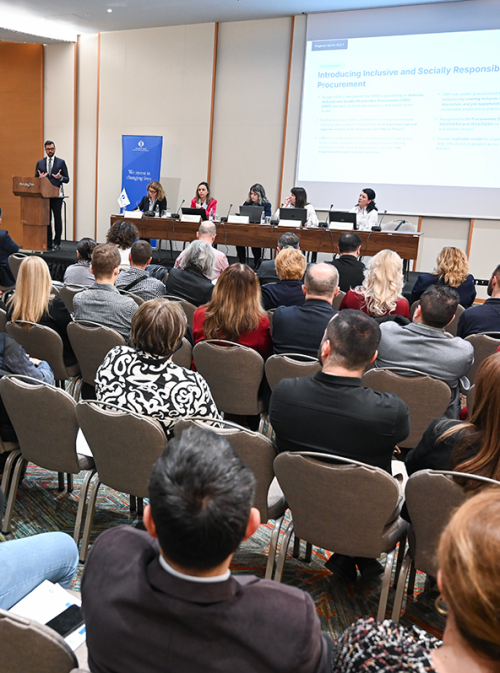
The workshop, “Pathways to Skills and Inclusion in the Solid Waste Sector”, focused on ensuring that the new infrastructure is matched by a trained and inclusive workforce. The programme will develop:
- on-the-job training schemes
- work-based learning opportunities
- cooperation between waste operators and vocational training providers
- employment pathways for unemployed youth, women and Roma communities
By strengthening technical, operational, health and safety, and management skills, the initiative supports the long-term sustainability of the waste system and promotes green job creation.
Steffen Hudolin, Head of Cooperation at the Delegation of the European Union to North Macedonia, underlined that “EU support for waste management is fully aligned with the Green Deal and combines infrastructure financing with investments in skills and education to expand employment opportunities for young people, women and vulnerable groups.”
Fatih Türkmenoğlu, Head of North Macedonia at the European Bank for Reconstruction and Development, noted that “while the project represents a transformative environmental investment serving more than one million citizens, its long-term success depends equally on strengthening technical, health and safety, and management skills across the sector.”
Muhamed Hoxha, Minister of Environment and Physical Planning, reaffirmed the Government’s commitment to waste sector reform, adding “Waste management today is not only an environmental topic –it is an economic opportunity, a matter of decent work and social justice.”
Policy alignment and next steps
The initiative contributes to North Macedonia’s alignment with EU environmental policies and the Green Agenda for the Western Balkans, while promoting economic inclusion through green jobs. Following the workshop, EBRD, WBIF and partners, national authorities and training institutions will finalise pilot education programmes and inclusive employment pathways to prepare the workforce for the next stage of infrastructure implementation.