A major step towards better connectivity
Construction of the Skopje–Blace motorway is beginning thanks to EU support. This includes a €167.6 million loan from the EBRD, and a €30.8 million EU investment grant for construction and €8.8 million in technical assistance for project preparation, implementation and supervision, channelled through the WBIF.
Upgrading this road to motorway standards will bring North Macedonia and Kosovo closer together, strengthen links with European transport networks, reduce journey times and create new opportunities for businesses and citizens.
Construction is expected to take four years. Once completed, the motorway will provide a faster and safer connection between Skopje and the border with Kosovo.
The 10.5-kilometre section from the Stenkovec interchange to the Blace border crossing forms part of the wider Skopje – Pristina route and the extended Trans-European Transport Network.
Together with the completed 2-kilometre section from the Stenkovec interchange to Blace, it will complete North Macedonia’s motorway connection to the border with Kosovo.
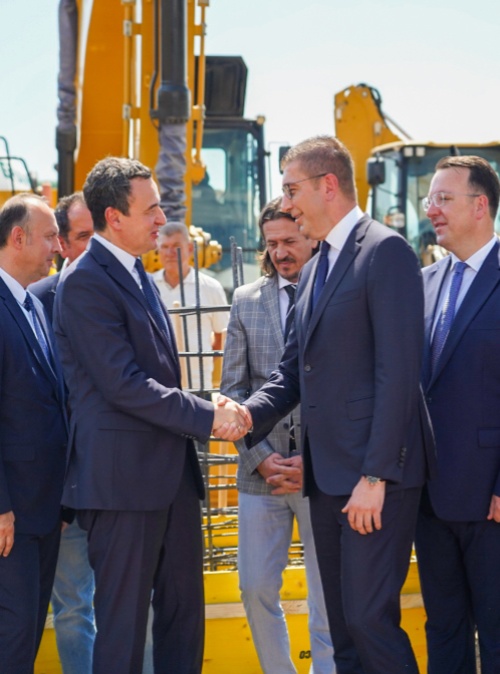
Prime Minister of North Macedonia Hristijan Mickoski, speaking at an event on 26 August 2026, described the start of construction of the Skopje–Blace motorway as a historic milestone: the project has been awaited for more than two decades. He highlighted the motorway’s strategic role in strengthening links between North Macedonia and Kosovo, supporting economic growth and connecting Pan-European Corridors VIII and X. He added that it forms part of the Government’s wider infrastructure programme and will create jobs and opportunities for young people. Prime Minister of Kosovo Albin Kurti welcomed the project as an important step towards stronger infrastructure and economic links, providing faster, safer travel and better connections between Skopje, Pristina and European markets.
First Deputy Prime Minister and Minister for European Affairs Bekim Sali said the motorway would connect people, businesses and markets, strengthen good-neighbourly relations and support European integration. Deputy Prime Minister and Minister of Transport Aleksandar Nikoloski highlighted its role in improving regional transport links, access to the ports of Durrës and Bar, and North Macedonia’s strategic position at the intersection of Pan-European Corridors VIII and X. Director of the Public Enterprise for State Roads Koce Trajanovski outlined the project’s technical complexity and financing package, noting that the 10.5-kilometre route includes five tunnels, eight bridges and four galleries, and will improve road safety, reduce journey times and strengthen regional connections.
Ben Nupnau, Deputy Head of the EU Delegation to North Macedonia, welcomed the start of construction as an important milestone after years of preparation and reaffirmed the EU’s commitment to regional connectivity through financial and technical support. He said the motorway would bring North Macedonia and its neighbours closer to the European transport network, facilitate trade, reduce journey times and strengthen regional economic ties. Once completed, it will turn a long-awaited connection into a safer route for people, a stronger corridor for business and another step towards a more integrated Western Balkans.
---
About WBIF and Global Gateway
The Western Balkans Investment Framework (WBIF) contributes directly to Global Gateway, the EU’s strategy to boost smart, clean and secure connections in digital, energy and transport, while strengthening health, education and research systems worldwide. Global Gateway aims to mobilise up to €300 billion worldwide in investments through a Team Europe approach, bringing together the EU, its Member States and financial institutions to leverage investments for a transformational impact.