Warmer, Healthier, Safer: How REEP is Renovating Public Buildings Across the Western Balkans
Launched in 2013 through the Western Balkans Investment Framework, the Regional Energy Efficiency Programme (REEP) today mobilises more than €1.1 billion in EU grants and loans from the European Bank for Reconstruction and Development (EBRD) and the German development bank KfW.
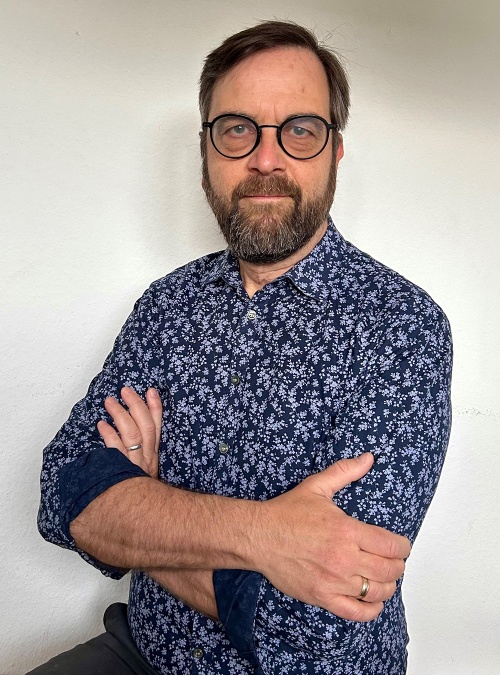
According to Stefan Koch, environmental expert at KfW and a civil engineer with more than 30 years of experience in environmental protection, social and health & safety standards, this scale of investment is deliberately steered to where it can make the greatest difference to citizens' lives.
"The region uses far more energy per unit of output than the EU, and most of it is lost in buildings. That is why we invest where the impact is greatest: schools, hospitals, dormitories and district heating."
— Stefan Koch, KfW
A transition citizens can feel
For the people of the Western Balkans, REEP's impact is most visible in ordinary spaces: warmer classrooms in winter, cooler ones in summer, cleaner air in hospitals and district heating systems that no longer waste what they burn. Behind those daily experiences stand substantial figures. Around 1,220 gigawatt-hours are now saved annually across the region, and 730,000 tonnes of CO₂ emissions avoided every year — the equivalent, Mr Koch notes, of removing more than 180,000 cars from the streets.
The benefits reach far beyond the balance sheets of ministries and municipalities. Regional experience shows that renovated public buildings use up to 50 percent less energy, freeing budgets for the services citizens actually rely on — better teaching in schools, better care in hospitals and lower operating costs for the institutions that host them.
"A warmer classroom, cleaner air and energy stability. Renovated buildings use up to 50 percent less energy — savings municipalities can redirect to what truly matters: the quality of teaching and care."
— Stefan Koch, KfW
Serbia in focus
In Serbia, KfW supports the energy renovation of 35 public buildings and the development of biomass-fuelled district heating in several municipalities. A new wave of projects is already in preparation: energy efficiency works in Prijepolje, an expansion of the existing programme in Novi Pazar, and the introduction of solar energy and heat pumps at Belgrade's Dunav and Cerak heating plants.
The choice of interventions is not accidental. Public buildings and district heating systems are, in most municipalities, the largest single consumers of energy — and typically among the least efficient. Modernising them is one of the fastest and most tangible ways to bring down emissions while also stabilising municipal spending on energy.
Behind the walls: the hidden side of renovation
Many of the buildings included in the programme date from the 1930s to the 1980s, a period when hazardous materials such as asbestos were still installed across Europe as cheap and effective construction products. Today, those same materials are among the most dangerous a renovation team can encounter, and they are treated with particular care in every REEP project.
"Many buildings we renovate date from the 1930s to the 1980s, when materials such as asbestos were installed all over Europe. Over the years it was found that asbestos is highly hazardous to human health. In fact, asbestos is the cause of the work-related disease with the most fatal cases — and we want to avoid this in our projects."
— Stefan Koch, KfW
Before any works begin, buildings are examined thoroughly. Trained contractors then remove hazardous materials under strict standards designed to protect workers, neighbours and, ultimately, the environment. This preparatory phase, largely invisible to the end user, is one of the reasons REEP-renovated buildings can be handed back to schools and hospitals as safer places than they were before.
More than energy: ESHS on site
Energy efficiency is measured in kilowatt-hours, but Mr Koch's remit is broader. As a specialist in Environment, Social, Health and Safety (ESHS) issues, he ensures that every step of a renovation respects a wide set of principles: emergency preparedness and response plans for both construction and operation, careful waste management, stakeholder engagement, traffic plans on and around construction sites, protection of biodiversity and prevention of water pollution.
"Saving energy must never come at anyone's expense. Renovating a school or hospital under operation is a discipline of its own — access control, noise, dust and site logistics need to be planned without putting workers, community members, children or patients at risk."
— Stefan Koch, KfW
Systematic risk assessments guide those decisions, with clear measures to reduce risks for workers and communities to a reasonable level. The social dimension goes further still: better ventilation, less moisture and mould, more daylight, and improved accessibility for people with disabilities. Transparent information to all stakeholders and a functioning grievance mechanism are considered as much a part of the project as the insulation in its walls.
As a consultant of the German Sustainable Building Council, Mr Koch stresses that sustainability spans a building's entire life cycle — from construction through daily operation to eventual demolition — and covers everything from the materials built in to the air breathed inside.
"When children walk into a renovated school, it is not just warmer — it is healthier and, in the end, a more effective learning environment. For me, that is the essence and the beauty of this work."
— Stefan Koch, KfW
Toward nearly zero-energy buildings
Looking ahead, REEP is moving beyond incremental savings. The programme's next horizon is nearly zero-energy buildings, where highly efficient construction is combined with on-site renewable energy to bring net consumption close to zero. Many of the required measures, Mr Koch points out, are neither exotic nor prohibitively expensive.
"Energy efficiency is not abstract policy. It is a warmer classroom, cleaner air and money that stays in the budget. Mostly this can be reached without too much additional and expensive effort, but with intelligent measures. The green transition succeeds when people feel it in their own life."
— Stefan Koch, KfW
For the Western Balkans, that is the core promise of REEP: modern public buildings aligned with European standards, using far less energy and emitting far less CO₂, while making everyday life visibly better for the citizens who learn, recover, work and live in them.
---
About REEP
Launched in 2013 under the Western Balkans Investment Framework (WBIF), the Regional Energy Efficiency Programme (REEP) supports renewable energy and energy efficiency investments across the region. With over €1 billion mobilised to date, it has refurbished more than 90 public buildings, supported 1,500 SMEs and 20,000 households. The achieved annual CO₂ emissions saved is equivalent to removing 183,000+ cars from the roads.
---
About WBIF and Global Gateway
The Western Balkans Investment Framework (WBIF) contributes directly to Global Gateway, the EU's strategy to boost smart, clean and secure connections in digital, energy and transport, while strengthening health, education and research systems worldwide. Global Gateway aims to mobilise up to €300 billion worldwide in investments through a Team Europe approach, bringing together the EU, its Member States and financial institutions to leverage investments for a transformational impact.