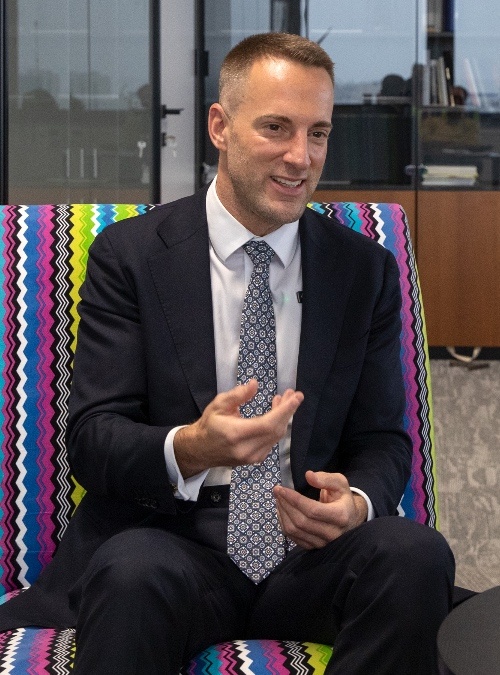
“Our aim is simple but hard to achieve: complete integration of the Western Balkans into the EU transport network.”
Interview with Matej Zakonjšek, Director of the Transport Community Permanent Secretariat
As the Director of the Transport Community Permanent Secretariat enters the final year of his current mandate, WBIF spoke with Matej Zakonjšek about the organisation’s role in advancing connectivity, reforms, and sustainable transport across the Western Balkans.
WBIF: Could you introduce us to the Transport Community Permanent Secretariat, its organisation and objectives, and why it’s important that it is based in Belgrade?
Matej Zakonjšek: The Transport Community is an international organisation that brings together 33 partners — 27 EU Member States represented by the European Commission and six regional partners from the Western Balkans. Our goal is simple but ambitious: full integration of the Western Balkans into the EU transport network. This means harmonising standards so that, for example, transport in Serbia operates under the same rules as in Slovenia or Sweden. The decision to locate the Secretariat in Belgrade was a joint one by the EU and the region, and it made the Transport Community the first international organisation with its headquarters in Serbia. While our primary focus remains the Western Balkans, over the past three years we have also welcomed Ukraine, Georgia, and Moldova as observers, with the hope that some will soon become full members.
Over the years, the Transport Community has worked very closely with the Western Balkans Investment Framework. What impact has this partnership had on the region’s connectivity?
Cooperation with WBIF has been fundamental to our work. Transport integration relies on two pillars. The first is the adoption and implementation of EU transport legislation and standards. The second is the delivery of concrete infrastructure projects that connect the region internally and with the EU. This second pillar is where WBIF plays a crucial role. WBIF is the main platform for financing these projects – modernising rail, roads, ports, and logistics infrastructure. Without this platform, achieving our core objective of integrating the Western Balkans into the European transport network would simply not be possible.
---
“Without WBIF, achieving the integration of the Western Balkans into the European transport network would simply not be possible.”
---
Implementation of reforms is also a key pillar of the EU Growth Plan for the Western Balkans. How does the Transport Community support partners in advancing the reforms needed?
Projects and reforms are two sides of the same coin. A new road without a long-term maintenance plan is not sustainable, and vice versa. Our role is to work closely with governments and public authorities across the region to ensure that projects and reforms progress together. We help identify where technical assistance, studies, or capacity-building are needed, and we facilitate the exchange of best practices from EU Member States. While institutions can provide theoretical frameworks, the real value lies in learning from countries that have already implemented these reforms successfully.
---
"Projects and reforms must go hand in hand—one without the other is not sustainable."
---
The Trans-European Transport network has recently been revised. What does this mean for the region?
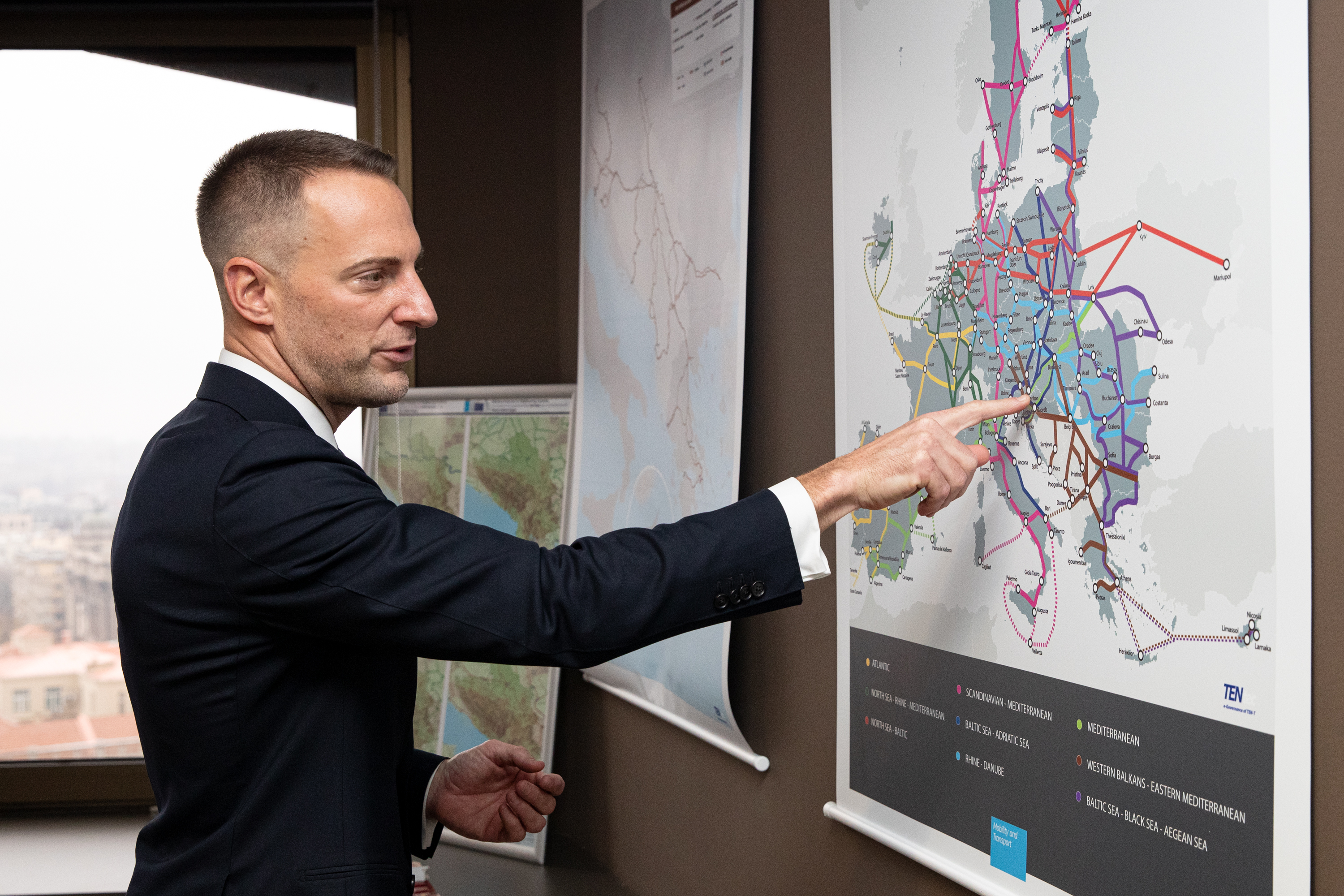
The TEN-T network is the backbone of our work. It goes far beyond individual corridors, bringing together roads, railways, inland waterways, ports, terminals, and major economic centres into a single, coherent network. The new Western Balkans–Eastern Mediterranean European Transport Corridor is a game changer. It no longer distinguishes between EU and non-EU countries. It reflects the real logic of transport: geography, efficiency, safety, and economic sense. This corridor connects South-East Europe as one integrated space, from Austria to Greece and Cyprus, and sets common standards across the entire region.
---
“The Western Balkans–Eastern Mediterranean Corridor is a game changer because it no longer distinguishes between EU and non-EU countries.”
---
This corridor also strengthens multimodality - roads, rail, and waterways. How does the Transport Community support this transition to more sustainable and safe transport?
For decades, most investment went into roads, and today the main roads in the region are in relatively good condition. Railways, however, suffered from underinvestment. This has started to change, particularly over the last five years. EU contributions through WBIF have funded record rail projects across the Western Balkans—such as €600 million for the Belgrade–Niš line or connecting Skopje with Sofia. Rail is essential if we are serious about decarbonising transport. We also see significant potential in inland waterways, particularly on the Danube and the Sava, as well as in port modernisation. The goal is to move from a patchwork to a network, connecting roads, rail, and waterways for maximum efficiency and sustainability.
---
"Rail is essential if we want to decarbonise transport."
---
One of the flagship regional initiatives is the Safe and Sustainable Transport Programme (SSTP). Why is this programme so important?
The SSTP focuses on smaller projects with big impact — areas that do not get as much attention as of major infrastructure. This includes improving level crossings, redesigning dangerous road sections, and modernising border crossings. Border crossings are particularly critical. A transport network is only as efficient as its borders. Through the SSTP and initiatives such as Green Lanes, we are targeting the busiest border crossings in the region to reduce waiting times, increase capacity, and improve safety. The European Commission has allocated more than €50 million to these efforts, and we expect to see tangible investments starting from 2026.
---
“A transport network is only as efficient as its border crossings.”
---
Looking back at more than a decade of WBIF investments, what are the most tangible benefits for citizens and businesses?
The European Union is the region’s largest investor, not just in infrastructure through WBIF but also in reforms and capacity building. Every single regional partner has benefitted from millions of euros of investments, supported by technical assistance from organisations such as ours. The real benefits are those felt by people in their daily lives: shorter travel times, reduced border delays, new business opportunities, and lower emissions - not just new roads or trains.
---
“The real benefits are not kilometres built or euros spent, but shorter travel times, safer transport, and new opportunities for citizens and businesses.”
---
You are entering the final year of your mandate as Director. What message would you share with WBIF stakeholders about the importance of regional cooperation?
The Transport Community is built on two equally important concepts: transport and community. Infrastructure alone does not work without trust, cooperation, and coordination. We saw this very clearly during the COVID-19 pandemic, when Green Lanes were designed and implemented in a matter of weeks to ensure uninterrupted supply of essential goods. That success was only possible because all stakeholders—governments, EU institutions, financial institutions, and operators—worked together. The same applies to WBIF. Its real strength lies in bringing everyone around the same table to pursue a shared goal. As we push for faster project delivery, we must also nurture this spirit of cooperation. It’s the foundation of everything we achieve.
---
“Infrastructure alone does not work without trust, cooperation, and a strong community behind it.”
---
Additional reading
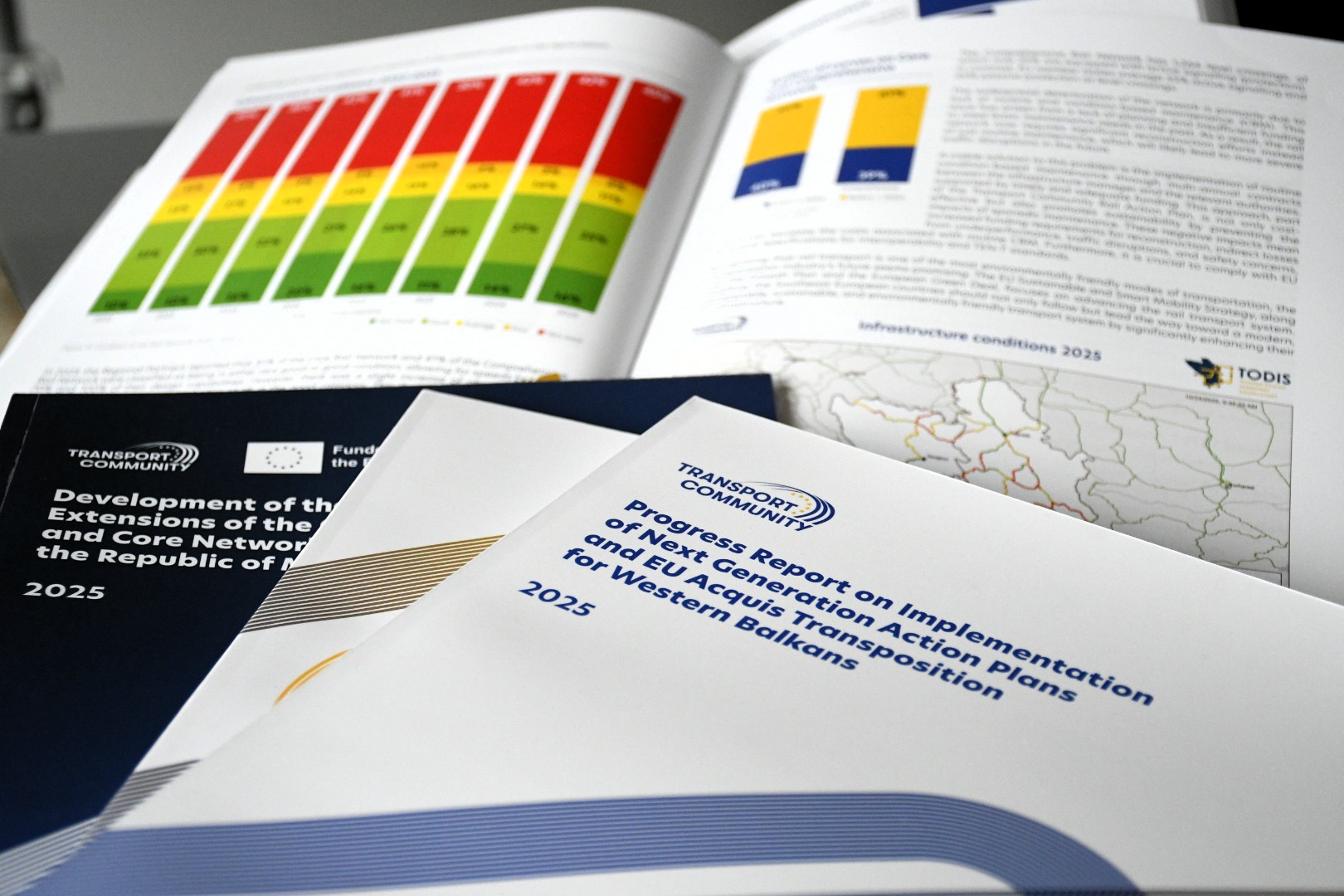
2025 annual reports of the Transport Community
TEN-T and European Transport Corridors Maps