Rail Corridor VIII Ministerial: WBIF at the heart of regional economic integration and security
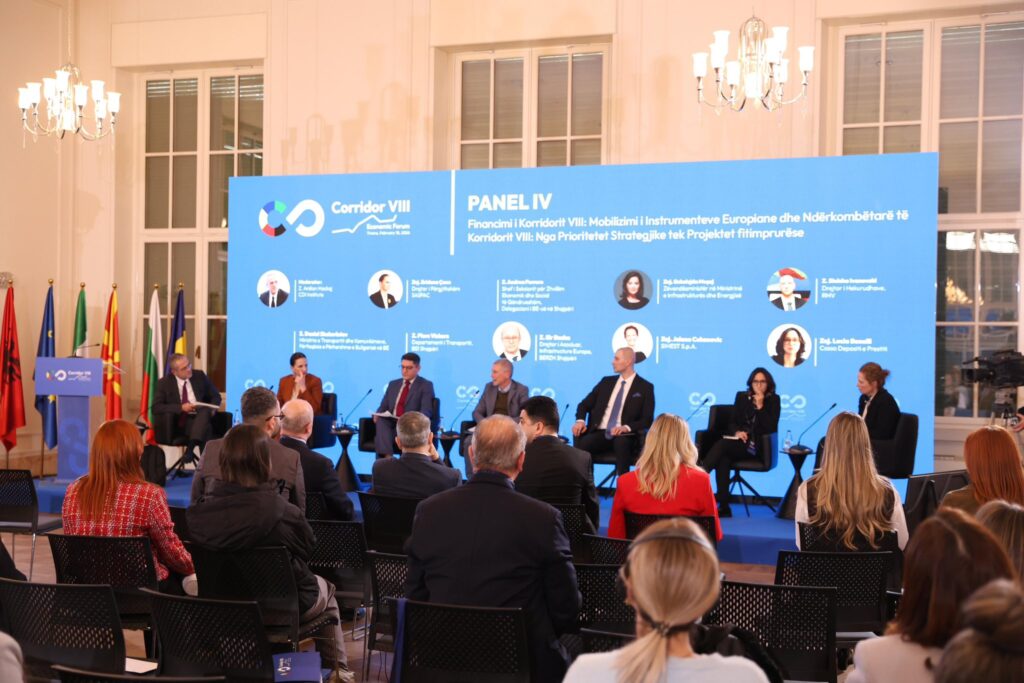
The Foreign Ministers of Albania, Bulgaria, Italy, North Macedonia and Romania met in Tirana on 18 February 2026 to assess the progress and further potential of Corridor VIII.
In a joint statement, the ministers emphasised that Corridor VIII is not only a vital infrastructure project but also a cornerstone for political, economic, and security cooperation in South-Eastern Europe.
The corridor, connecting the Adriatic and Black Seas via Albania, North Macedonia, and Bulgaria, is recognised as a key driver for sustainable growth, competitiveness, and the gradual integration of the Western Balkans into the European Union (EU).
Forming part of the Trans-European Transport (TEN-T) core network, the route from Skopje (North Macedonia) to Bulgaria is due to be completed in 2030. The extended core network between Skopje and Durres (Albania) should be finalised by 2040.
WBIF’s central role in mobilising resources
The joint statement underscored the importance of mobilising financial resources from EU instruments, including the Instrument for Pre-Accession (IPA III), the Western Balkans Investment Framework (WBIF), as well as from international financial institutions and public-private partnerships. WBIF has been instrumental in facilitating these efforts, ensuring that strategic projects like Corridor VIII receive the necessary funding and technical support to become fully functional and integrated into the European transport network.
Key commitments from the Ministerial
- Economic Integration: The ministers recognised regional economic integration as a key driver for sustainable growth, competitiveness, and economic convergence, in line with the EU’s four freedoms.
- Security and Stability: Corridor VIII was highlighted as a priority for increasing military mobility, resilience, and connectivity, directly contributing to the security of NATO’s southeastern and eastern flanks.
- Implementation and Next Steps: The five-party format was consolidated as a structured high-level political platform for dialogue and cooperation, with a commitment to regular consultations to rapidly advance Corridor VIII.
© CD Institute. Read more
Tunnel progress: a milestone for connectivity
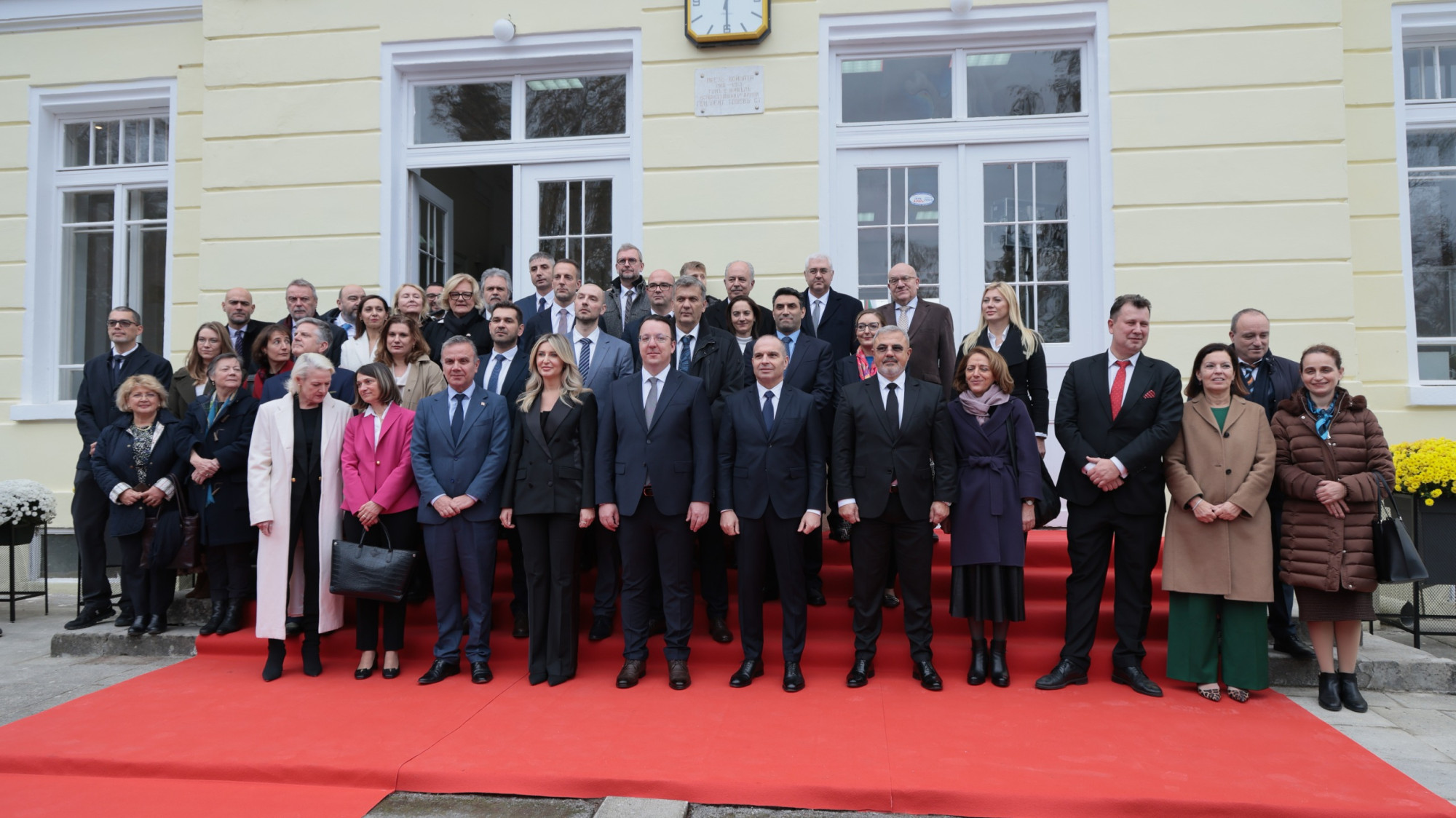
In February 2026, Bulgaria’s National Assembly ratified the agreement - signed in November 2025 - for the construction of a cross-border railway tunnel between Bulgaria and North Macedonia. This tunnel, located near Gyueshevo-Deve Bair, is the core link that will directly connect the railway networks of both countries, enabling seamless transport between the Black Sea and the Adriatic.
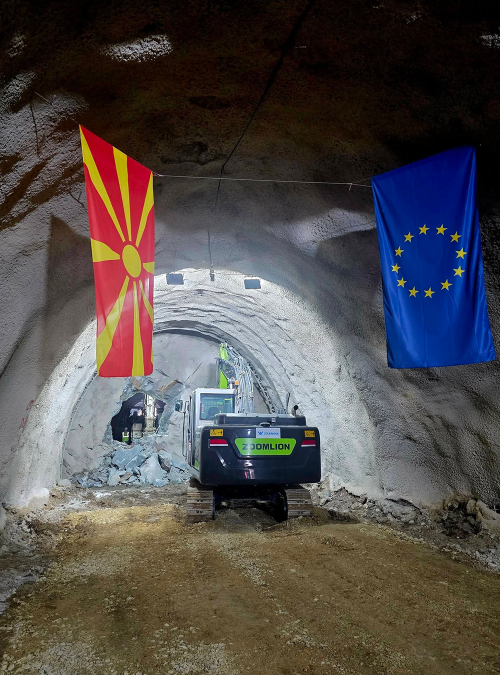
There is light at the end of the tunnel on the Macedonian side as the last of 15 tunnels was broken through on the section from Kriva Palanka to the border with Bulgaria. The tunnel’s completion is a testament to the shared commitment of both countries and the EU to transform Corridor VIII into a fully functional, sustainable, and integrated axis of European connectivity and security.
© Permanent Secretariat of the Transport Community. Read more
WBIF’s ongoing support
WBIF remains committed to supporting the transformation of Corridor VIII into a strategic artery of European connectivity, economic development, and prosperity. To date, the EU has contributed over €357 million to Corridor VIII in investment grants and technical assistance through WBIF - €122 million in Albania and €235 million in North Macedonia - ensuring that the corridor delivers tangible benefits for the people and economies of the Western Balkans.
For more project details:
https://wbif.eu/project-detail/PRJ-MKD-TRA-001
https://wbif.eu/project-detail/PRJ-MKD-TRA-022
---
About WBIF and Global Gateway
The Western Balkans Investment Framework (WBIF) contributes directly to Global Gateway, the EU’s strategy to boost smart, clean and secure connections in digital, energy and transport, while strengthening health, education and research systems worldwide. Global Gateway aims to mobilise up to €300 billion worldwide in investments through a Team Europe approach, bringing together the EU, its Member States and financial institutions to leverage investments for a transformational impact.